IT ALL STARTED WITH HER
In honor of my mom —
whose life, and death,
changed everything.
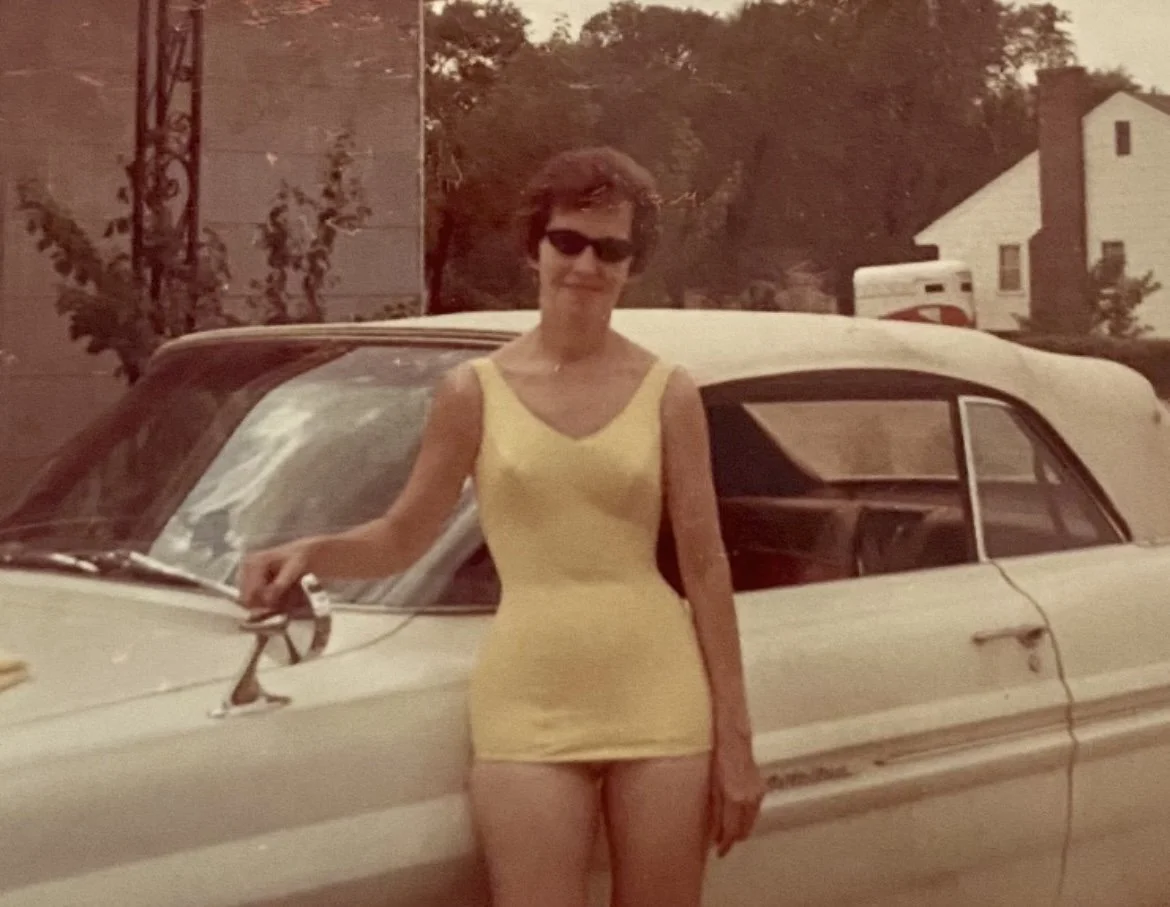
my mom
MARY ELIZABETH PHILLIPS 1936 - 1995
THE MORNING AFTER
The morning after my mom died, my dad looked at me and said: “Pick yourself up by your bootstraps and get to work.”
The next morning, his motivational speech was: “You determine your happiness.” Those two sentences have echoed in my mind for over thirty years.
I was twenty-five years old. My mom was my world. She had been sick for years — at her sickest, I was a sophomore at Enid High, skipping school to stay in bed with her. We would watch soap operas and eat Oreos and raspberry sherbet.
We hadn't even buried her, yet I was supposed to be okay. Act like nothing had happened.
I don't think my dad was being unkind. He just didn't know what to do with grief, or with big emotions. In his world, you didn't sit in sorrow — you got up, and you went to work. It was the only way he knew.
THE DARKNESS
So I tried on my own. I tried not to be sad. Tried not to feel lost. Tried not to feel broken and hopeless.
Days slowly turned into years. But the ache never left. A friend recommended I see a Christian counselor. After two sessions, she quoted Ezekiel 36:26 and “diagnosed” me with a heart of stone. My homework was to pray to God for a new heart.
I never returned.
I got a job. Met my husband. Had a son, and then a daughter. Life kept moving. But the darkness moved with me. Out of desperation, I tried again. A second counselor. Same advice: pray more, stop dwelling, move on.
I tried. My heart was still stone. I prayed, but nothing changed. I was lost. And I was broken.
A KNOCK AT THE DOOR
Then one day, there was a knock at the door.
A mom who had walked through depression herself. She didn't come with a diagnosis, or a Bible verse, or even advice. She brought snacks. She sat with me. She just… stayed. She listened.
She introduced me to Ruth. Ruth — now a retired counselor — helped me see that I was not broken. She sat with me while I cried. She listened as I poured out all the hurt and pain I had buried for years. She walked with me: through sorrow, through new losses, through transitions, through the diagnosis of our son, through our deportation, the day our daughter moved to boarding school.
She asked questions. She reflected. She challenged. She clarified. She reframed.
She was a constant presence as I journeyed through sorrow.
WHAT GRIEF NEEDS
So when I think about grief, I don't think about stages or formulas. I think about presence. I think about Job. He lost everything. His friends did something we don't do very well anymore: they sat with him. For seven days, they were simply with him, and didn't say a word. No advice. No solutions. Just present.
And this isn't just in Scripture. Across cultures and religions, grief is expected. It's structured. They make room for it. In Judaism, there is Shiva — seven days set aside to grieve. In Hinduism, thirteen days of mourning. In Islam, widows observe Iddah.
The morning after my mom died, I was told to get up, go to work, and be happy. I was not taught how to grieve. Not educated on the phases. Not given time, or permission, to be sad.
Grief needs time. Grief needs community. Grief needs permission. And when those are missing, people don't learn to grieve — they learn how to hide it.
Grief is the natural response to loss — not just death, but any loss. A marriage. A job. A relationship. The life you thought you'd have, but don't.
It's all the love you still have — looking for a new way to be shared.
Grief doesn't follow a timeline. It comes in waves. Some days you're okay — maybe even good. Then, sometimes, you're not.
THIS TIME WAS DIFFERENT
In January 2026, my mother-in-law passed away — my last living parental figure. She had been like a mother to me for twenty-six years. Her death hit me hard. But this time was different. This time, I didn't run from it. I didn't bury it. I didn't try to bootstrap my way through it, or pray it away, or determine my own happiness.
I let myself be sad. I embraced it. I sat with it. I was not okay — and I didn't even try to be.
My Christmas tree stayed up. My pajamas stayed on. I let myself cry. I let myself remember. I watched her favorite shows. I ate her favorite food. I spent days just thinking about her.
And then one day, I decided it was time. I took the Christmas decorations down. I cleaned up. I bought some plants. And I decided it was time to start living again.
Not because the grief was gone, or finished. But because I had made space for it. That's the way grief works.
FINAL THOUGHTS
I've shared all of this to say one thing: there is no formula for grief. Every loss is different. The impact is different. The way grief follows you, surprises you, revisits you — all different.
What I know from thirty years of living with grief — and from the people who helped me find my way through it — is that walking through it with someone is easier than trying to do it alone.
Sullivan & Sullivan was born out of this journey. We can't fix grief. But we can offer what it needs: time, space, presence, community.